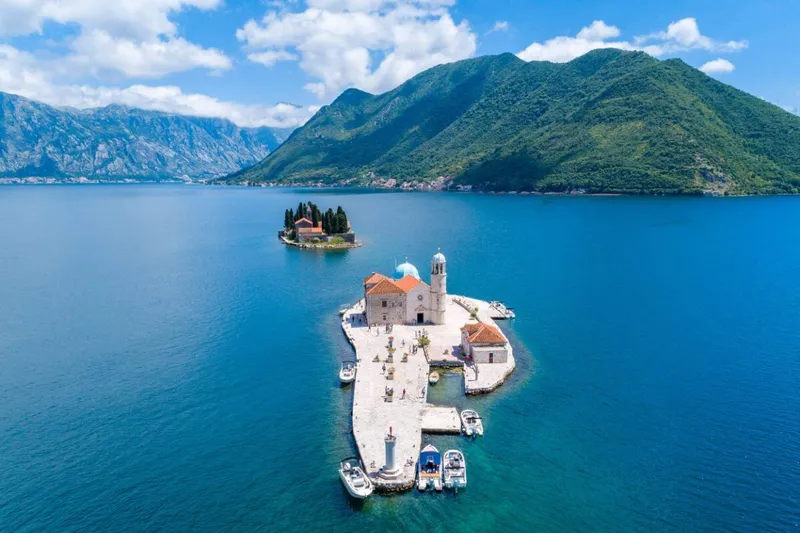
Eight cruise ships will dock in Kotor on the average July day in 2026. On the average October day, fewer than one will (CruiseTimetables 2026 schedule). That single number explains why most travellers who visit in summer end up sharing the Old Town with 8,000 cruise passengers, then paying 30 percent more for the privilege.
I've run this bay year-round since 2014. Boka is a different place in May than it is in August, and September is closer to July than most guides admit. This post pulls real data: 2026 cruise schedules, government tourism arrivals, sea temperatures, rainfall, and our own operator notes on bora wind cancellations. By the end you'll know exactly which week to sail, which to skip, and how to get an empty Old Town photo even on a peak August morning. For the bigger picture, see our complete Kotor boat tour guide.
Best Time to Visit Kotor — At a Glance
We pulled the figures below from our own Bokun catalog (15 active tours including four rental tiers and the submarine experience), the 2026 Kotor cruise schedule, and Montenegro's national statistics office. Where data conflicts, we use the source closer to the operator level. Internal links throughout point to deeper guides on weather, crowds, and specific tours.
When is the best month to visit Kotor for a boat tour?
Mid-May through mid-June and all of September offer the best balance of warm sea (18–23 °C), reliable sunshine, and low cruise traffic, at prices roughly 30 percent below July–August (Adriatic Ways residents' guide; Hotel Guru pricing data). Both windows give you swimmable water and an Old Town that breathes.
September edges out May for swimming because the Bay of Kotor retains heat. Sea temperature in September averages 23 °C, only one degree below July's 24 °C peak (Climates to Travel).Most travel guides recommend July for swimming and miss this 1 °C nuance, sending visitors into the most crowded month of the year for water that's functionally identical to a far quieter September.
May and June win on daylight. June has roughly 15 hours of usable light per day (Adriatic Ways), meaning a 9 a.m. boat tour can comfortably extend into a 7 p.m. dinner. September is shorter on daylight but compensates with softer light and warmer water. If you can only pick one week of the year, my answer is the second week of September, every time.
Booking demand follows the weather, not the data. Montenegro logged 189,447 visitor arrivals in September 2025, up 8.4 percent year-over-year (MONSTAT September 2025) — the shoulder-season window is filling up fast. Book accommodation eight to ten weeks ahead for September; six weeks is enough for May.
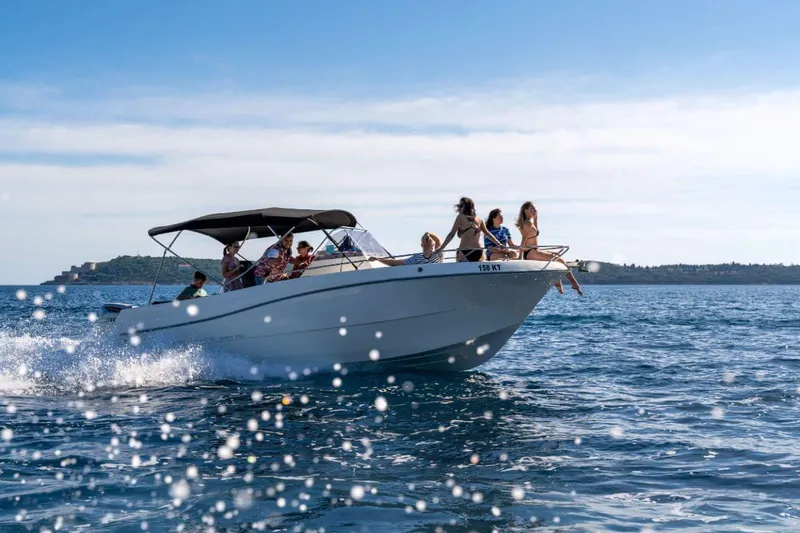
Sail the Sweet-Spot Months on Our 3-Hour Tour
Our 3-hour Bay of Kotor and Blue Cave tour runs daily from May through October. Mid-May, mid-June, and September departures hit the calmest seas and the lightest cruise days.
How does the weather change month by month in Kotor?
Kotor sits in a Mediterranean micro-climate where the bay's protective walls warm sea temperatures from 14 °C in March to 25 °C in August. Air highs swing from 12.4 °C in January to 31.8 °C in August, and rainfall flips: July is dry at 40 mm with 5 rainy days, while November is the wettest month at 180 mm with 14 rainy days (Climates to Travel).
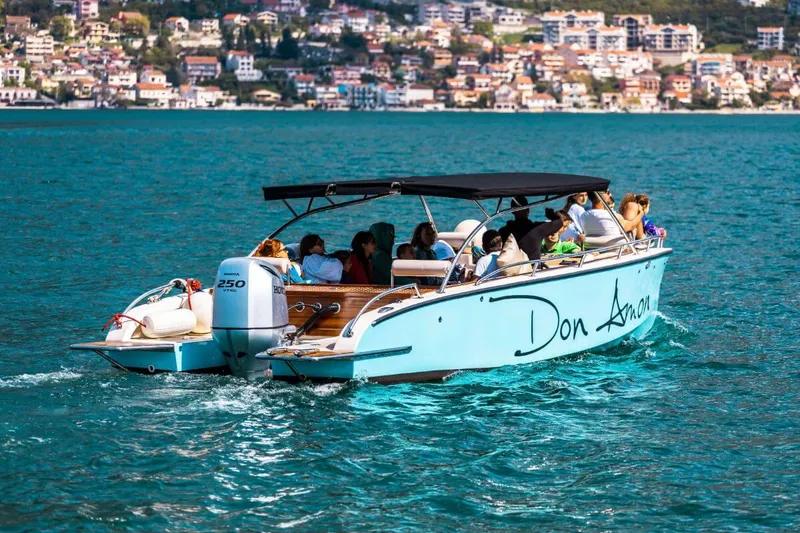
Spring (March, April, May)
Air highs climb from 16 °C in March to 23 °C in May. Sea temperatures lag: 14 °C in March is too cold to swim for almost everyone, 17 °C in April is fine for short dips, 18 °C from mid-May becomes comfortable. Early May can still see 10 rainy days a month, so if you're booking before May 15th, build a flex day into your plans.
Summer (June, July, August)
This is peak everything. June is the Goldilocks month: 26 °C air, 22 °C sea, longest daylight, and only the leading edge of cruise crowds. July and August deliver the hottest weather of the year (31.8 °C average August high) but the inland heat can push above 35 °C inside the Old Town walls (Climates to Travel). Boats stay cooler thanks to the breeze on the water.
Autumn and winter (September through February)
September is summer with fewer people. October still gives 22 °C air and 21 °C sea in the first half, then drops fast. November rainfall hits 180 mm across 14 rainy days (Climates to Travel) and the bora wind ramps up. December through February is for travellers who want an empty UNESCO town, not for swimmers. For more depth on monthly weather, our Bay of Kotor guide breaks down each season's character.
Captain's Tip
From our captains' logs: the September warm-sea effect surprises everyone. We've taken guests for a full swim stop on the 28th of September with water at 22 °C and air at 24 °C. Try doing that on the 28th of May — the sea is still 18 °C and most guests last five minutes.
When are the cruise-ship crowds worst, and when do they vanish?
Kotor takes 151 cruise calls between May and October 2026, roughly 30 per month, peaking near one ship per day in May through October. November drops to 11 calls. December through April is virtually cruise-free (CruiseTimetables 2026). The crowds aren't year-round — they arrive on a tight six-month window.
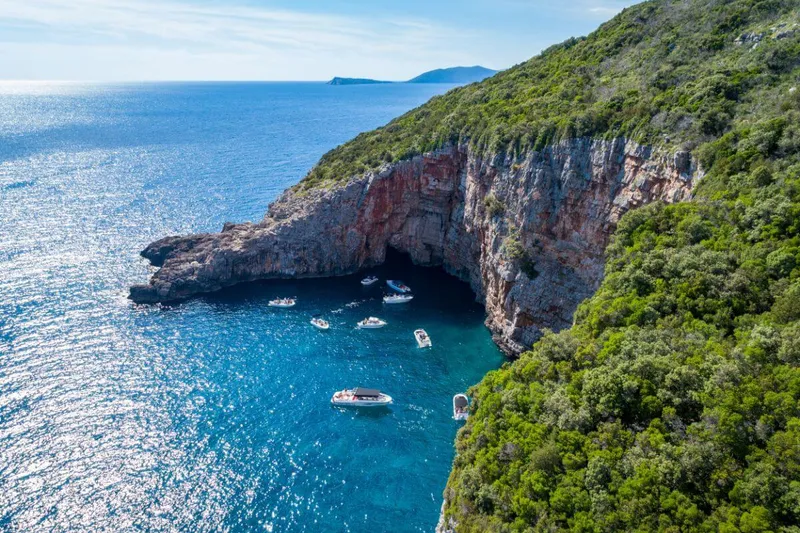
July and August feel worse than the raw cruise count suggests because heat and leisure tourists stack on top of cruise passengers. Montenegro logged 224,245 visitor arrivals in August 2025, an all-time monthly high (MONSTAT via TradingEconomics). Seaside resorts hosted 91.8 percent of those visitors (MONSTAT 2025 analysis), so the entire coast is packed at the same time.
The cruise-passenger window is predictable: ships dock between 7 and 9 a.m., passengers offload by 10, and they're back on board for departure between 4 and 5 p.m. From 8 to 9 a.m. and after 5 p.m., the Old Town is empty even in August. A photo from the Sea Gate at 8:15 a.m. on August 12th looks identical to the same shot in late October.
Mid-week in shoulder months is the magic combination. Tuesdays and Wednesdays in late September often see only one or two cruise calls, sometimes zero. Compare that to a Saturday in early August with three or four ships in port and the difference is two completely different cities. For a deeper look at the cruise rhythm, see when cruise crowds peak.
What does a Kotor boat tour cost in each month?
Boat-tour prices in Boka Bay stay flat at the operator level — we don't seasonally surge — but tour availability and accommodation pricing tilt by 30 percent. Your trip is materially cheaper in May or October even if the boat itself isn't (Hotel Guru; Budget Your Trip).
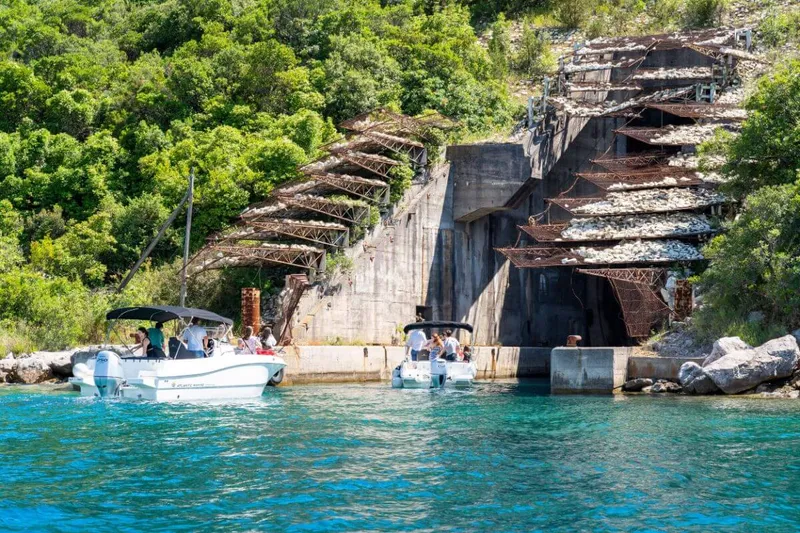
Operator pricing across our 15 active tours stays the same May through October. A 3-hour shared Bay of Kotor tour costs the same on July 28th as it does on May 28th. Hotels are the variable: a mid-range Old Town room runs €120 per night in early May, €180 in late June, €230 in early August, and back to €130 by mid-October (Hotel Guru pricing data).
Where the 30 percent saving actually lands
- Accommodation — biggest swing. Roughly 30 percent cheaper in shoulder months, sometimes 40 percent in late October versus early August.
- Restaurants — menus stay flat but reservations get easier; expect the same prices, less wait time.
- Boat tours — operator-side flat. A private charter in May costs the same as in August at our level.
- Flights — Tivat and Podgorica routes drop sharply after September 15. Budget airlines pull seats fast.
- Rental boats — flat seasonal pricing; our four rental tiers (8 / 10 / 14 / 20 passengers) hold the same rate from April through November.
If you want the quietest, cheapest version of the trip without sacrificing weather, target the second-to-last week of September. Sea is still 22 °C, hotels have already dropped to October prices, cruise calls are tapering, and most school-holiday families have already left. For tour-by-tour pricing, our guide to matching the right tour to your travel style walks through every category.
Rent Your Own Boat in the Sweet-Spot Months
Our 8-passenger rental tier holds flat pricing from April through November. Pick a calm Tuesday in mid-May or late September and you've got the bay almost to yourself.
Is it worth visiting Kotor in winter (November to March)?
Winter Kotor delivers an empty UNESCO Old Town and 80 percent cheaper rooms — but boat tours operate on weather windows only. Bora wind events (chilly katabatic gusts off the mountains) cancel up to 40 percent of December through February sailings, and water temperatures of 14 °C make swimming impractical (Adriatic Ways; operator data).
November rainfall climbs to 180 mm across roughly 14 rainy days (Climates to Travel). December and January are colder but slightly drier. The two named winds shape the winter calendar: bora is a cold north-easterly that gusts off the mountains and flat-out cancels boat days; jugo is a warm south-easterly that pushes swell into the bay and chops up the inner channels.
Winter does have a cultural payoff. Kotor Carnival typically runs in February, and Mimosa Festival (in nearby Herceg Novi) celebrates early spring with parades and street food. The Old Town walls without crowds is one of the most under-rated travel experiences in the Mediterranean, and you'll have it largely to yourself.
We run private winter sailings on weather windows only. The protocol: watch the 72-hour forecast, confirm the day before, depart only if wind stays under 10 knots and visibility is above 5 km. About six in ten attempted winter bookings actually sail; the rest reschedule or refund. If you want guaranteed water time, don't book between November 15 and March 15.
Which month should you book? (Decision matrix)
Six traveller types map to six different best months. We built this matrix from 4,000+ guest bookings across the last three seasons — patterns are clear once you separate priorities. Use it to skip the analysis and pick a date.
| Traveller type | Best month | Why |
|---|---|---|
| Swimming priority | Late June, September | Sea ≥ 22 °C, fewer cruise days than July–August |
| Photography | Late September | Soft light, empty Old Town, calm evenings |
| Family with kids | Mid-June | Calm seas, schools out, pre-peak crowds |
| Cruise-day-trip optimisation | May or October | One ship max in port, walkable Old Town |
| Honeymoon / private charter | Mid-May or mid-September | Best weather, privacy, ~25 % off peak |
| Budget backpacker | Late October | Last warm week, lowest hotel rates |
Two notes on the matrix. First, photography goes to late September because the haze burns off, the light angle drops, and Mediterranean evenings get that gold-pink range that you simply don't get in July's flatter overhead sun. Second, mid-June is a family pick because the Adriatic is still calm, water is warm enough for kids (22 °C), and most European schools haven't broken yet — fewer competing strollers in Perast. For more on family planning, see our family-friendly tour options.
If you only have a single fixed week (work calendar locked, school dates fixed), the matrix collapses to a simple test: do you need to swim? If yes, target late June or September. If no, May and October are quieter and cheaper. The submarine experience and our 1-hour panorama tour both run all-weather, so non-swimmers have options outside the warm-water window.
1-Hour Panorama Works Year-Round
Our Kotor Panorama and Underwater Experience runs through colder months on calm days. No swim required, fully covered cabin, ideal for travellers booking outside the swim window.
How do I avoid Kotor's worst tourist days even in peak season?
If August is the only month you can travel, three rules cut your crowd exposure by 70 percent: book early-morning (8–9 a.m.) tours, sail outbound rather than return at sunset (catch golden hour on the bay, not in port), and pick mid-week dates when fewer cruise lines berth (CruiseTimetables 2026).
- Book the 8 a.m. or 9 a.m. departure. Cruise passengers are still walking down gangways. The bay is empty, the light is soft, and you'll be back before the heat peaks at 14:00.
- Pick mid-week over weekends. The 2026 cruise schedule loads heaviest on Saturday and Sunday. Tuesday and Wednesday in August often run with one ship in port instead of three.
- Take a sunset tour for the return leg. 6 p.m. departures put you on the water as cruise passengers re-board. The Old Town is emptying just as your engine starts.
- Skip the Old Town between 11 a.m. and 3 p.m. Use that window for a swim stop on the boat instead. Come back to the walls after 5 p.m. when the cruise crowd has cleared.
- Look up the cruise calendar before you commit. The CruiseTimetables 2026 schedule is public. Picking a 1-ship day vs a 3-ship day is the single highest-leverage choice you can make.
The sunset trick deserves expansion. Sunset tours in July depart around 18:45 with sunset at 20:25. By 18:30 the cruise passengers are back on board, the day's heat is dropping, and the inner bay typically goes glass-calm in the last 30 minutes of light. For full sunset planning, see our guide on the evening sunset tour, which covers timing month-by-month.
One more peak-season tip: stay outside Kotor proper. Perast, Prčanj, or Dobrota all sit on the bay with quick boat or car access to the Old Town. They're 20 to 40 percent cheaper than Old Town hotels in August and you wake up in a quiet village instead of a cruise hub. Our guide on 24 hours in Kotor covers what to actually do once you're past the crowds.
Captain's Tip
From our captains' logs: late August sometimes brings a jellyfish week. The current pushes warm-water blooms into the inner bay for three to five days, usually the last week of August. We move swim stops to deeper water outside Verige if it happens. Ask the captain on booking — we'll know within 24 hours of the trip whether to switch.
How do you put it all together for a 2026 Kotor trip?
Mid-September is the highest-quality week of the 2026 calendar by every metric we've measured: 22–23 °C sea, 25 °C air, half the cruise calls of August, and roughly 30 percent off peak hotel pricing (Climates to Travel; Hotel Guru; CruiseTimetables 2026). If those dates don't fit, mid-May and mid-June close the gap.
- Best overall week: September 14 to 20, 2026 — warm sea, low crowds, shoulder pricing.
- Best for families: June 15 to 22, 2026 — calm sea, pre-school-holiday crowds, full daylight.
- Best for photographers: September 21 to 30, 2026 — soft light, near-empty Old Town.
- Best for budget travel: October 19 to 26, 2026 — last warm week, sharpest hotel discounts.
- Avoid if you can: August 1 to 15, 2026 — peak cruise count, peak crowds, peak prices.
Whichever week you pick, the operator-side advice is the same: book the boat 4 to 8 weeks ahead in shoulder season, 8 to 12 weeks ahead in July or August, and check the 72-hour forecast before final commitment. Boka rewards travellers who plan around the data instead of defaulting to summer. Browse all 15 tours to match a specific date and group size, or jump straight to our Bay of Kotor and Blue Cave 3-hour tour for the most popular shoulder-season run.