
Perast Old Town
A UNESCO World Heritage site northwest of Kotor, Perast captivates with baroque palaces, graceful churches, and stunning views of the Bay of Kotor.
About Perast Old Town
Few places in the Adriatic distil so much beauty into so small a footprint as Perast. Strung along a single waterfront street at the foot of St Elijah's hill, this tiny baroque town faces the open water of the inner Bay of Kotor and gazes out at two of the most photographed islets in the Adriatic — St George and Our Lady of the Rocks. There are no traffic lights, no high-rises and barely a car in sight; just honey-coloured palazzi, the green spires of cypress trees on the islands, and the soft slap of water against old stone quays.
Part of the UNESCO World Heritage area of the Natural and Culturo-Historical Region of Kotor, Perast Old Town packs an astonishing concentration of Venetian-era palaces and churches into a settlement that today counts only a few hundred permanent residents. It is a place that rewards slowing down — to climb a bell tower, to drift out to a church built on a man-made island, or simply to sit on the promenade and watch the light change over the bay. This guide goes deep into Perast's history, architecture, islands, traditions and the practical know-how that makes a visit effortless.
Quick Facts
Visit This Destination With Us
- Perast and Our Lady of the Rocks - 2h · 2 hours · From 25.2€ per person
- Our Lady of the Rocks and Perast - 1.5h · 1.5 hours · From 121.5€ per boat
- Organic & Hedonistic Kotor Bay Discovery - 2h · 2 hours · From 150€ per boat
- Private Full Kotor Bay Tour and Swimming Time - 6h · 6 hours · From 486€ per boat
- Blue Kotor Bay - Our Lady of the Rocks, Perast and Swimming - 2.5h · 2.5 hours · From 202.5€ per boat
Ancient Heritage: The Spila Cave Above Perast
Long before the first Venetian galley anchored here, people had already made their home on this stretch of the bay. High above Perast, the Spila cave has yielded one of the most important archaeological records in the region — a layered story of human presence reaching back into the Neolithic. Excavations have turned up tools, pottery and other traces from the Stone Age, followed by finds from the Illyrian, Roman and early Christian periods.
It is a reminder that Perast's significance is not merely a baroque flourish. For thousands of years this sheltered corner of the bay has drawn settlers and seafarers, its calm waters and commanding views offering both protection and opportunity. The Spila finds anchor the town's identity in deep time and explain why so many cultures left their mark on this small shore.
The Venetian Period (1420–1797)
Perast's golden age began in 1420, when the town came under the protection of the Republic of Venice, and lasted until the Republic itself fell in 1797 — nearly four centuries that shaped everything you see today. Under the winged lion of St Mark, Perast grew from a fortified outpost into one of the most prosperous and influential maritime communities of the eastern Adriatic.
Its position guarding the narrowest navigable approach to Kotor made it strategically vital, and Venice granted the town privileges that fuelled its rise. Peraštan captains commanded merchant fleets that traded across the Mediterranean, and the town earned a fierce reputation for defending the bay against Ottoman incursions. The wealth those captains brought home was poured into stone: the palaces, churches and the towering campanile that still define the skyline were built by families who had made their fortunes at sea.
At its height Perast was effectively a town of sea captains — dozens of them at once — a community where seamanship was both livelihood and identity. The Boka Navy (Bokeljska Mornarica), the centuries-old maritime fraternity of the bay, drew much of its prestige from Perast, and its ceremonial traditions are still performed at the town's festivals today. When Venice finally fell in 1797, Perast's commercial golden age faded with it, but the buildings, the legends and the rituals of that era have been preserved with extraordinary care — which is exactly why the town feels like a window straight back into the eighteenth century.
The Nautical School of Captain Marko Martinović
Perast's seafaring prestige reached its zenith with Captain Marko Martinović (1663–1716), a master navigator, mathematician and shipwright whose nautical school is often described as the first of its kind in the region. In 1698, on the recommendation of Venice, Tsar Peter the Great of Russia sent a group of young Russian noblemen — most accounts cite seventeen — to study under Martinović in Perast. Here they learned chart-reading, navigation and seamanship, going out on real voyages across the Adriatic.
That a Russian emperor would entrust the training of his future naval officers to a captain from this small bay town speaks volumes about Perast's standing in the seventeenth century. The town's maritime influence on Russia did not end there: another Peraštan, Matija Zmajević, went on to become an admiral of the Russian fleet. It is a remarkable legacy for a town you can walk end to end in a few minutes.
A town whose captains taught the navigators of an empire — Perast wears its salt-stained history with quiet pride.
Baroque Architecture: Palaces & Churches by the Water
What makes Perast Old Town so extraordinary is density. Squeezed into one long waterfront ribbon is a collection of baroque palazzi and churches so concentrated that the whole town feels like an open-air museum. Estimates vary, but the town is generally said to hold on the order of sixteen to nineteen palaces and a similar number of churches and chapels — an astonishing tally for a place this size, and a direct measure of the wealth its sea captains brought home.
Because the mountainside leaves so little flat ground, Perast was built along essentially a single street that hugs the shoreline. Strolling it is the simplest way to take in the architecture: coats of arms carved above doorways, weathered balconies, sun-bleached shutters and walls in every shade of cream and ochre, all looking out over the same glittering water that made it all possible.
The Bujović Palace & Perast Museum
The grandest of the surviving residences is the Bujović Palace (Palata Bujović), built in 1694 for the Venetian captain Vicko Bujović and today home to the Perast Museum (Muzej grada Perasta). With its handsome arcaded loggia opening onto the water, it is a textbook example of the bay's late-baroque style. Inside, the museum tells the story of Perast's maritime heyday through portraits of captains, ship models, weapons, navigational instruments and centuries of family heirlooms — the perfect place to put faces and objects to the history written into the stone outside.
St Nicholas Church & Its Bell Tower
At the heart of the old town stands the church of St Nicholas (Sveti Nikola), the parish church dedicated to the patron saint of sailors. Its 55-metre bell tower — built in 1691 and the tallest campanile on the entire Bay of Kotor — is Perast's defining landmark. For a small fee you can climb the worn stone stairs to the top, where the reward is one of the most spectacular panoramas in Montenegro: the red-tiled rooftops of Perast directly below, the two islands set in the blue water, and the mountains rising sheer on every side of the bay. It is the single best vantage point in town and well worth the climb.
See Perast & the islands from the water
Reach Perast the way its captains always did — by sea. This relaxed two-hour speedboat trip from Kotor cruises the inner Bay of Kotor and stops at the church of Our Lady of the Rocks, with time to explore Perast itself.
The Two Islands of Perast
No view of Perast is complete without its famous pair of islets, sitting side by side just offshore. They look like twins from the promenade, but their stories could hardly be more different — one shaped by nature, the other built entirely by human hands.
Our Lady of the Rocks (Gospa od Škrpjela)
Our Lady of the Rocks is one of the Adriatic's true wonders: an entirely man-made island. According to local tradition, it began when sailors found an icon of the Madonna on a rock here in the fifteenth century, and over generations the Peraštans built up the islet by sinking old ships and dropping stones around the reef. Today it carries a beautiful blue-domed church filled with votive offerings and a small museum, and it is the only one of the two islands open to visitors. A short boat ride from the Perast waterfront takes you across — the classic Perast experience.
St George Island (Sveti Đorđe)
Its neighbour, St George (Sveti Đorđe), is a natural island, crowned by a Benedictine abbey dating back centuries and ringed by the dark, slender cypress trees that give it such a romantic, melancholy silhouette. The island has long served as a cemetery for old Perast families and is not open to the public — but its brooding beauty, especially at dusk, has made it one of the most painted and photographed scenes in Montenegro. Seen together from the shore, the bright, welcoming Our Lady of the Rocks and the shadowy, private St George make an unforgettable contrast.
Getting to Perast from Kotor
Perast sits roughly 12 kilometres northwest of Kotor, an easy trip of about twenty to thirty minutes whichever way you choose to arrive. The journey itself, hugging the shoreline of the inner bay past the waterside villages of Dobrota, Orahovac and Risan, is half the pleasure — the mountains crowd close to the water and the views open up at every bend.
Getting There at a Glance
- By boat (the most scenic): Arriving by water is how Perast was always meant to be seen — the town and its islands reveal themselves slowly as you cruise in, framed by the mountains. A speedboat trip from Kotor is the easiest way to combine the journey with a stop at Our Lady of the Rocks.
- By bus: The Blue Line bus runs from Kotor's main bus station along the coast to Perast roughly every 30–60 minutes in season, making it a cheap and simple option for independent travellers.
- By car or taxi: The drive along the bay road takes about 20–30 minutes. Note that the old town itself is effectively car-free — vehicles are kept to the road above, and you park outside and walk down into the heart of Perast on foot.
That car-free character is a big part of Perast's charm: with traffic banished to the edge, the waterfront belongs to pedestrians, and the only sounds are footsteps, church bells and the lapping of the bay.
Beaches & Swimming in Perast
Perast is a town of stone rather than sand, so do not come expecting a wide beach. Swimming here is a more intimate affair: small pebble and concrete spots tucked along the waterfront and in front of a few hotels, where you can slip straight into the famously clear, deep water of the inner bay. The lack of a big resort beach is precisely what keeps the town so peaceful.
For the best swimming, take to the water itself. The inner Bay of Kotor is sheltered and calm, and a boat trip lets you anchor in quieter coves and dive straight off the side into water that is clean and refreshingly cool even in high summer — a memorable way to cool off between exploring the town and its islands.
Festivals & Living Traditions
For all its postcard calm, Perast keeps alive some of the most evocative folk traditions in the Adriatic — ceremonies that turn the bay itself into a stage and connect today's residents directly to their seafaring ancestors.
The Fašinada (22 July)
Every year at sunset on 22 July, the men of Perast carry on the centuries-old Fašinada. A procession of decorated wooden boats laden with stones rows out to Our Lady of the Rocks, where the stones are dropped around the island to reinforce and renew the man-made islet — the very same act, repeated generation after generation, that created it in the first place. Watching the boats glide out across the golden evening water, singing as they go, is one of the most moving sights in Montenegro and has been recognised as part of the country's intangible cultural heritage.
Shooting the Rooster (Gađanje Kokota, 15 May)
Each 15 May, Perast marks Gađanje kokota — the "Shooting of the Rooster" — a tradition commemorating the town's victory over an Ottoman force on that date in 1654, when a far larger Turkish raiding party was repelled by the determined Peraštan defenders. A rooster is set adrift on a small float in the water before St Nicholas Church, and local marksmen compete to hit it, the contest accompanied by the ceremonial Boka Navy (Bokeljska Mornarica) and a religious procession, with the winner historically awarded a commemorative cloth. It is a vivid, slightly theatrical reminder that this serene town once stood on the front line of the bay's defence.
Best Time to Visit & Practical Tips
Perast is at its best from April to October. The shoulder months of May, June and September are the sweet spot — warm enough to swim, long days of sunshine, and noticeably fewer crowds than the July–August peak, when the narrow waterfront and the small boats out to the islands can get busy. April and October are cooler and quieter, lovely for those who care more about atmosphere than swimming.
- Time your visit for the light: Come early in the morning or in the late afternoon to enjoy the town at its most serene, before and after the midday tour groups.
- Stay for sunset: The view of Our Lady of the Rocks from the Perast promenade as the sky turns gold is unforgettable — easily the most photogenic moment of the day.
- Climb the bell tower: Bring a little cash for the small entry fee to the St Nicholas campanile; the panorama from the top is the best in town.
- Wear comfortable shoes: The waterfront and lanes are old stone, often uneven and sometimes slippery near the water.
- Combine the islands: Pair your walk through the old town with a short boat hop to Our Lady of the Rocks to see Perast from both land and sea.
Captain's Tip
For the most magical experience, visit Perast in the early morning or late afternoon when the day-trip crowds thin out, and stay long enough to watch the sun set over Our Lady of the Rocks from the promenade — the single most beautiful view in the whole Bay of Kotor.
Experience Perast for Yourself
Perast is the kind of place that lingers in the memory long after you leave — a small town that once taught the navigators of an empire, where baroque palaces lean over clear water and two islands seem to float just offshore. To feel why generations of sailors fell in love with this corner of the Bay of Kotor, there is no better way than to arrive as they did: gliding in across the water. Set out from Kotor by speedboat, step onto the man-made island of Our Lady of the Rocks, and let Perast tell you its salt-stained stories at its own unhurried pace.
Frequently Asked Questions
Tours Visiting This Destination
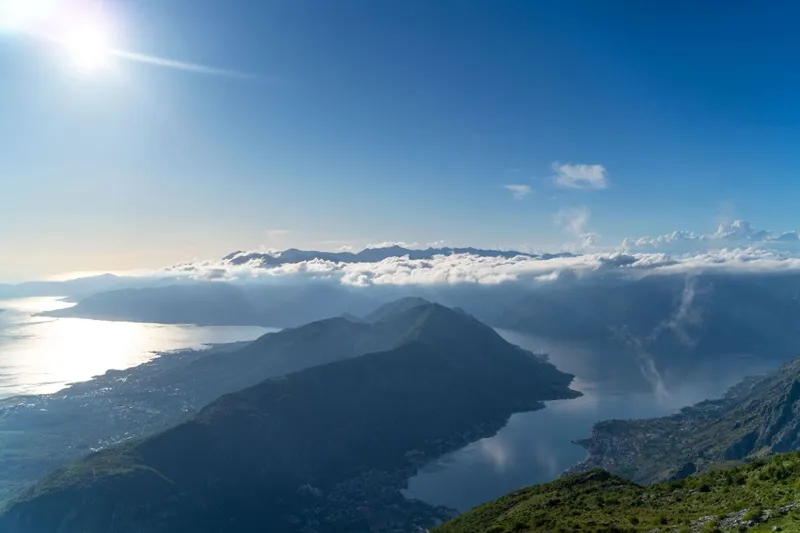
Perast and Our Lady of the Rocks - 2h
Embark on a journey with breathtaking viewpoints of towering cliffs over a majestic gulf, embraced by photogenic medieval towns, labyrinthine roads, and scenic terrains, all while allowing the sea breeze to caress you during an enjoyable ride.
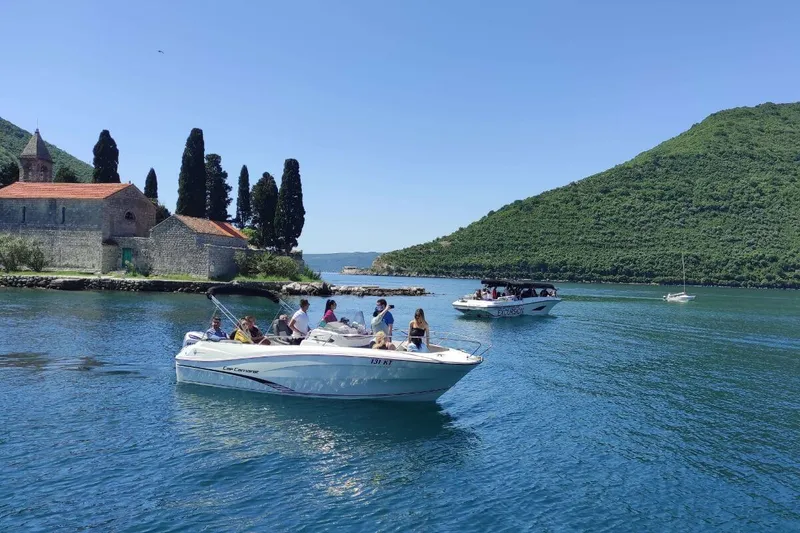
Our Lady of the Rocks and Perast - 1.5h
We welcome avid sailors and explorers of Montenegrin beauties to a cruising tour that allows you to run away from crowded inshore places; where you can see rich biological and cultural diversity from afar and strengthen your bond with Mother Nature.
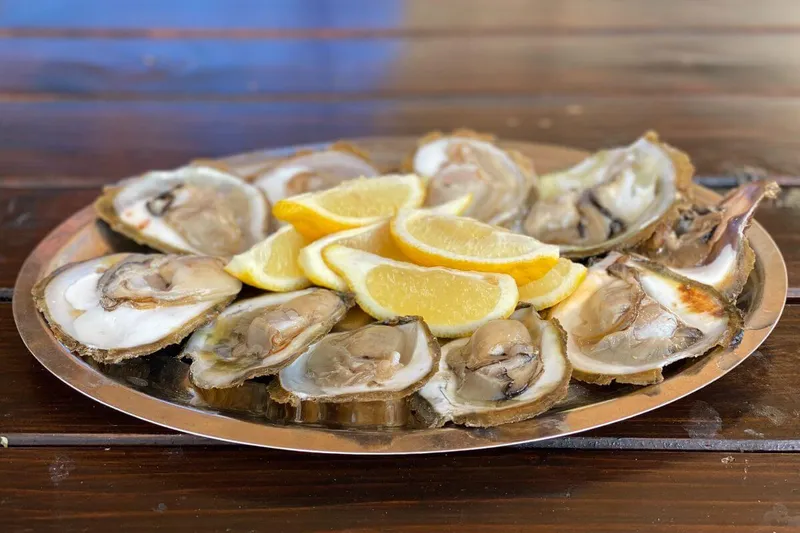
Organic & Hedonistic Kotor Bay Discovery - 2h
Feel a unique and unrepeatable gastronomic experience. After an exciting cruise through the Bay of Kotor and visiting the island Our Lady of the Rocks, you will enjoy the freshest and completely organic seafood in a small family mussel farm on Boka shore. Indulge in the charms of the Adriatic in an authentic Mediterranean ambiance, and remember these wonderful memories for a long time.
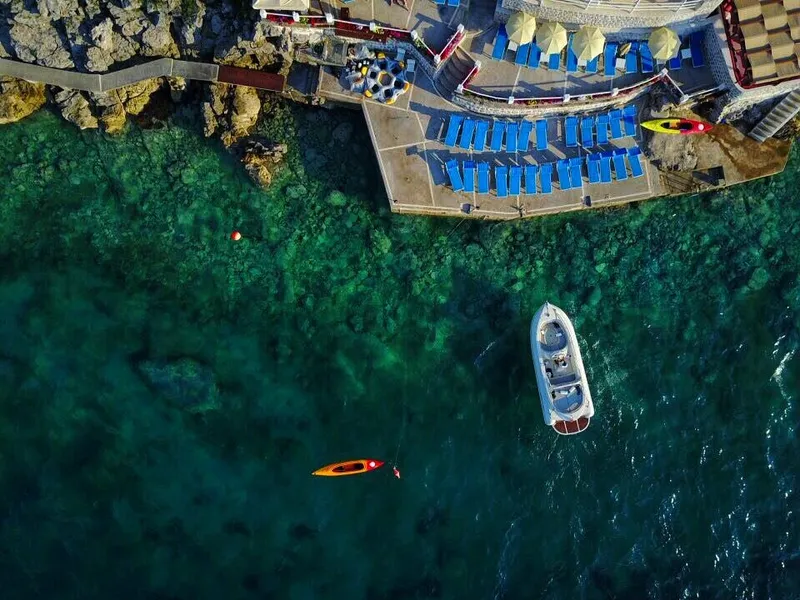
Private Full Kotor Bay Tour and Swimming Time - 6h
Want to swim in crystal clear water, set on a pebble beach that features a panoramic view of Mother Nature’s wonders? This tour leads you to such a place, called Zanjice while adding 40 minutes of sightseeing of the Kotor Bay, a 30-minute visit to the church Our Lady of the Rocks, and another 30-minute trip to the Old Town of Perast, with its baroque palazzi and graceful churches.
Blue Kotor Bay - Our Lady of the Rocks, Perast and Swimming - 2.5h
Take advantage of your holiday in the most charming bay of Europe and visit its favorite tourist attractions and sights. In addition to unreal beauty, swimming and fun, Boka bay will provide you with a unique adventure that you will remember forever. Hop on this private boat tour with us, and we guarantee you an unforgettable time.
Ready for the Adventure of a Lifetime?
Join 100,000+ travelers who chose Montenegro Submarine. Book now with free cancellation.