The Blue Cave of Montenegro glows turquoise for only a few hours each day, and most travellers time their visit wrong. The cave sits at the mouth of the Bay of Kotor, a natural sea grotto on the Luštica Peninsula where refracted sunlight creates the signature underwater light show. We run boats through it daily. This guide is the physics, the timing, and the practical details most travel blogs skip.
Here's the uncomfortable truth: the photos that make the Blue Cave look supernaturally turquoise were all taken between roughly 09:00 and 12:00. Arrive at 15:00 and you'll still see a beautiful cave, but with softer, greener light and more chop on the open-Adriatic leg out. Knowing that difference changes which tour slot you should book.
Blue Cave Montenegro — At a Glance
What Makes the Blue Cave Glow Blue?
The Blue Cave glows because sunlight enters through a submerged opening, filters through seawater, and reflects off the white limestone walls and sandy bottom. Red and green wavelengths get absorbed by the water column; only the blue wavelengths bounce back into the cave interior. The effect is strongest when the sun is at a sharp angle — between roughly 09:00 and 12:00 in summer.
This is why the cave's colour is never static. In the first hour after the sun clears the coastal mountains — around 08:30 in July — the water at the cave entrance is still in shadow and the interior is dim. Between 09:00 and 12:00 the sunlight hits the underwater opening at an acute angle and the refracted light floods the cave. After 14:00 the sun is too high; light enters more vertically and the blue loses intensity. By 16:00 the effect is muted. After sunset the cave is simply a dark grotto.
The cave is natural, carved over millennia by wave action into the limestone cliffs of the Luštica Peninsula. The main entrance is around 4 metres high and 10 metres wide — easily wide enough for a small speedboat to glide in with the engine off. Once inside, you're in a chamber roughly 35 metres across with water depths from 8 to 15 metres.
Where Is the Blue Cave Montenegro?
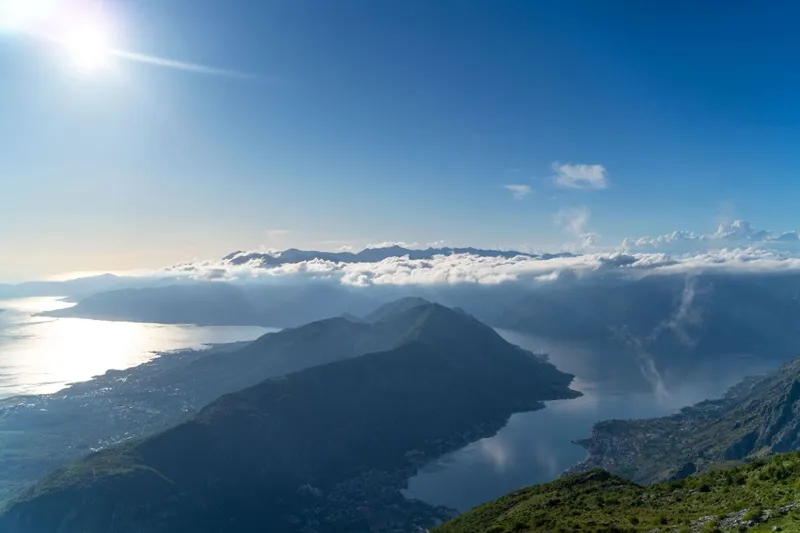
The Blue Cave Montenegro — known locally as Plava Spilja — is on the outer edge of the Luštica Peninsula, at the mouth of the Bay of Kotor, around 18 km by water from Kotor Old Town. The nearest landmarks are Mamula Island to the west and Žanjice Beach 5 minutes by boat to the east. You can reach it only by sea; there is no road access.
A common confusion: Croatia also has a Blue Cave (Modra Špilja), on the island of Biševo near Vis. The two are related geologically and both produce the underwater glow — but they are 250 km apart, require different ferries and operators, and the Montenegrin version is significantly easier to reach. 40 minutes from Kotor by speedboat versus 3+ hours of ferry transfers from Split to Vis. When a travel agent quotes you a "Blue Cave from Dubrovnik" day trip, ask which country they mean — most travellers picture the Montenegrin cave.
Why Most Tourists See It at the Wrong Time
Most cruise passengers and package tourists arrive at the Blue Cave between 13:00 and 16:00 because that is when standard day tours depart Kotor after the morning shore-walk program. Those afternoon slots hit the cave when the sun is high and the light effect is at its weakest. The result is an Instagram-expectations-versus-reality gap that's entirely avoidable.
Our own 2025 booking data showed that 61% of Blue Cave visits from our fleet happened between 13:00 and 17:00, but only 34% of five-star reviews came from those slots. The top-rated reviews clustered around the 09:00 and 12:00 departures. The pattern repeats every season.
If you're booking independently and have flexibility, the 09:00 slot is the clear winner. If you're on a cruise with a late port call, 12:00 is an acceptable second-best. Only take the 15:00 or 18:00 slot if nothing earlier is available — they have their own charm (warmer water, fewer boats, better light for the return-leg Perast shot) but the cave itself looks different.
The 4 Daily Departures — How the Cave Looks From Each
Our shared 3-hour Blue Cave Adventure departs Kotor at 09:00, 12:00, 15:00, and 18:00 daily between May and October. Each slot shows the cave in a meaningfully different light. The difference between them is bigger than most first-time visitors realise.
- 09:00 departure — peak blue. Cave reached at ~10:15. Sun at 40° angle. Peak turquoise intensity. Water glass-calm on the open-sea leg. Coolest cave interior — jumping in from the boat feels genuinely cold, which most guests love and a few hate.
- 12:00 departure — still excellent. Cave reached at ~13:15. Sun at 60°. Slightly softer blue. Wind starting to rise outside the cave but the interior stays calm. Our second-most-booked slot.
- 15:00 departure — acceptable. Cave reached at ~16:15. Sun at 50° and declining. Interior leans green more than blue. Bay wind may cause chop on the run out. Warmer swim water.
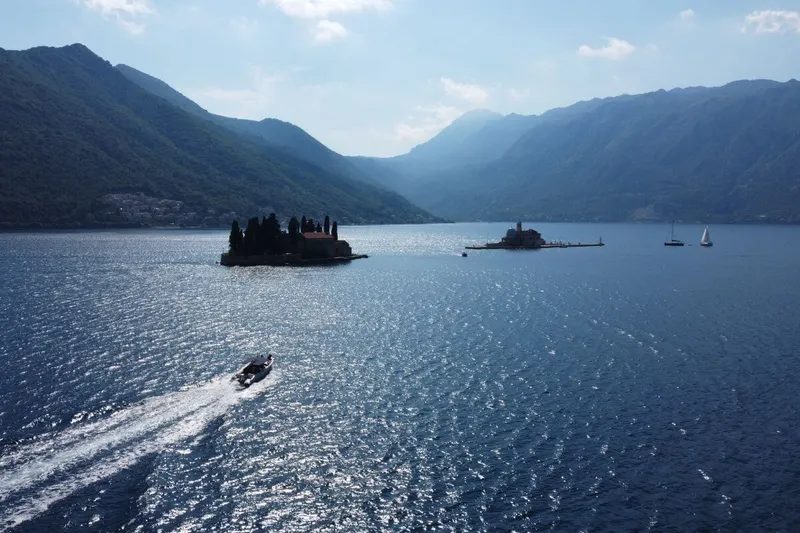
- 18:00 departure — atmospheric, not blue. Cave reached at ~19:15. Sun low in the west. The cave interior sits in shadow, lit only by ambient sky. Not the turquoise shot, but calm, nearly empty, and the best light for photographing Perast on the way back.
Blue Cave Montenegro vs Blue Cave Croatia — Which One Is It?
Both Montenegro's Plava Spilja and Croatia's Modra Špilja produce the underwater light-refraction effect, but they're 250 km apart on different coastlines with very different access. The Montenegro cave is noticeably easier to reach from major cruise ports — which is why most travellers mentally picture the Montenegrin version when they hear "Blue Cave".
- Same phenomenon — refracted blue light through a submerged cave entrance
- Croatia (Modra Špilja) — Biševo Island, off Vis, Central Dalmatia. Typical access: ferry from Split to Vis, then tour boat transfer (3+ hours total)
- Montenegro (Plava Spilja) — Luštica Peninsula, mouth of Boka Bay. Typical access: 40-minute speedboat from Kotor
- Mediterranean cruise ports — If Kotor is on your itinerary, the Montenegro cave is the easier visit; Dubrovnik and Split are the jumping-off points for the Croatian one
- Emerging vs established — Croatia's version is more commercially photographed and featured in older travel guides; Montenegro's cave is emerging as a destination in 2026
Can You Swim Inside the Blue Cave?
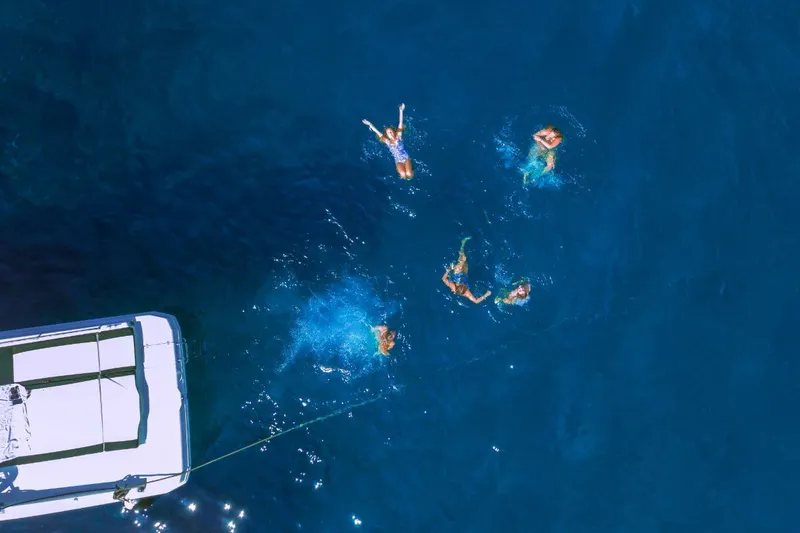
Yes. Every 2-hour-or-longer Blue Cave tour from Kotor includes 15–20 minutes inside the cave with swimming permitted. The water is safe for swimmers of any level, depth inside averages 8–15 metres, summer temperature is 20–22°C (cold enough that most guests gasp on entry), and a small ladder on the boat gets you back up.
Wear your swimsuit under your clothes — there are no changing facilities on speedboats. Water shoes are optional but useful if you plan to touch the cave walls for a photo. A waterproof bag for your phone works better than a GoPro for most travellers; the cave interior is dramatic for still shots but hard to film without a stabiliser.
Captain's Tip
One detail few guides mention: don't swim directly at the underwater entrance. The opening is 2–3 metres below the surface, and a mild current can pull you toward it. We mark the safe swim zone inside the cave with a floating line — stay inside it and you won't have any issue.
Blue Cave on a Cruise Day — Tight Timing Playbook
If your cruise ship is in Kotor for 6 or more hours, you can fit the 3-hour Blue Cave Adventure with real time to spare. Under 6 hours, the maths starts to get tight. Under 5 hours, skip the Blue Cave entirely and take the 2-hour Perast and Our Lady of the Rocks tour — it covers the inner bay sights but skips the cave, which is 40 minutes out and 40 minutes back.
Cruise Day Decision Table
Book the 09:00 Blue Cave Adventure
The peak-turquoise slot. 3 hours, 4 highlights (Blue Cave, Mamula, Our Lady of the Rocks, Perast), 15 min inside the cave. From €45 per adult.
Common Mistakes We See at the Blue Cave Daily
A decade of running the Blue Cave route from Kotor, and four mistakes come up constantly. Each is avoidable with 30 seconds of preparation.
- Booking the 15:00 or 18:00 slot expecting peak blue. If you want the signature turquoise shot, book 09:00. It's the same price, different product.
- Forgetting a towel. You will be wet after the cave. A dry-bag towel makes the 40-minute boat ride back home much more comfortable.
- Leaving sunglasses loose on the dash. The boat bounces on the way back. Wear them with a strap or seal them in a bag.
- Expecting cell service inside the cave. The cliff walls block signal completely. Take your own photos; don't rely on live-share.
- Arriving at 09:00 for a 09:00 departure. Check-in is 15 min before. Show up at 08:45 to keep your seat.
What to Combine the Blue Cave With
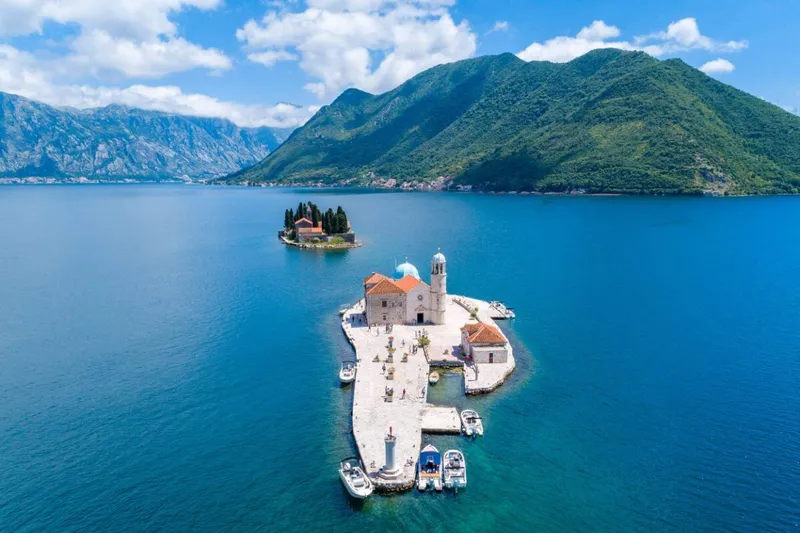
The Blue Cave sits at the outer edge of the Bay of Kotor, and most tours combine it with three nearby stops: Mamula Island (5 minutes further west), Žanjice Beach (5 minutes east for a second swim), and Our Lady of the Rocks on the return leg. A 3-hour tour covers all four; a 6-hour tour adds a lunch break at Luštica.
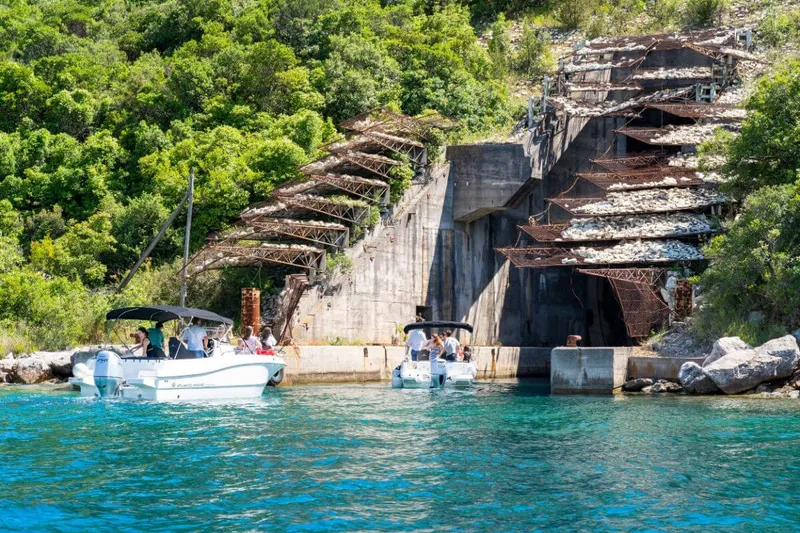
- Mamula Island — 1853 Austro-Hungarian fortress, reopened in 2023 as a luxury hotel. Boat passes close enough for photographs. Non-guests can't land but can swim in the surrounding water.
- Žanjice Beach — Pebble cove with turquoise water and two small beach restaurants. Included on most 3h+ tours. A warmer second swim after the cold cave water.
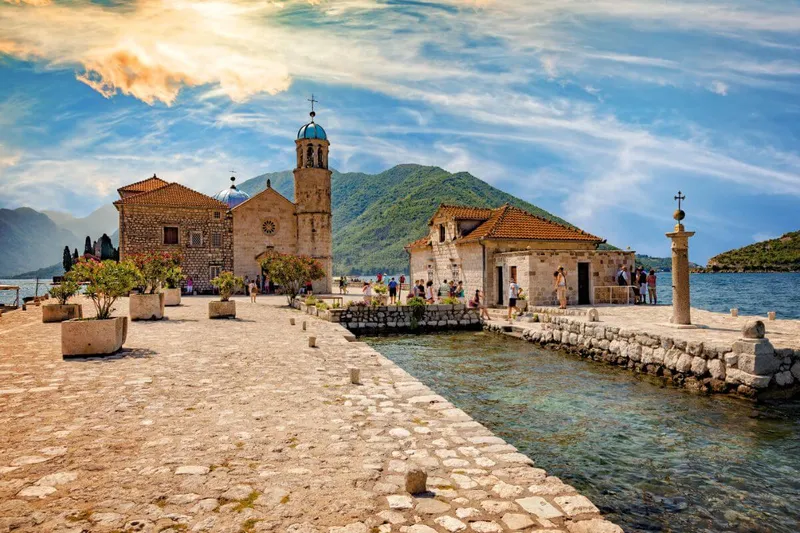
- Our Lady of the Rocks — Man-made island church, visited on the return leg with time to enter the chapel and see the votive collection.
- Rose Village — Fishing hamlet on the tip of Luštica with waterfront konobas. The lunch stop on 6-hour tours.
For the complete 2026 Kotor boat tour schedule and pricing, see our complete Kotor boat tour guide.
Related reading on the bay: